
Nassau County DMV Refusal Hearings
You said no to the breath test. Maybe you thought refusing was the smart move. Maybe you were frightened and it came out as no. Maybe you asked for a lawyer first and the officer wrote that down as a refusal.
Whatever happened at the roadside, here is what matters now. You are not facing one case. You are facing two. One is a criminal Nassau County DWI prosecution in Hempstead. The other is an administrative proceeding run by the Department of Motor Vehicles, aimed at one thing only, taking your license for at least a year.
They are separate. They run on separate schedules, in front of separate decision makers, under separate rules of proof. Winning one does not win the other. And the second one moves first, which is why most of the damage in refusal cases is done before people understand what is happening to them.
- 31+ Years defending DWI cases on Long Island
- 2,000+ Clients personally represented
- 7× Best Lawyer on Long Island
Two Cases, Two Buildings, Two Very Different Fights
A Nassau County chemical test refusal splits your case in half the moment you are arraigned.
The criminal case is prosecuted by the Nassau County District Attorney’s office in the District Court at 99 Main Street in Hempstead. It carries jail exposure, fines, probation, and a permanent criminal record. It is decided by a judge or a jury, and the People must prove their case beyond a reasonable doubt.
The refusal case is a civil administrative matter run by the New York State DMV. There is no prosecutor, no jury, and no reasonable doubt standard. An Administrative Law Judge hears the arresting officer, decides four narrow questions, and can revoke your license for a year or more on nothing more than a preponderance of the evidence. Your criminal case can end in a complete dismissal and that revocation will still stand.
| Criminal DWI case | DMV refusal hearing | |
|---|---|---|
| Where it is heard | In person, Nassau County District Court, 99 Main Street, Hempstead | Remotely by Webex, on the statewide DMV calendar |
| Who decides | Nassau County judge or jury | DMV Administrative Law Judge, who may sit anywhere in New York |
| Who presents the case | Nassau County District Attorney | The arresting officer |
| Standard of proof | Beyond a reasonable doubt | Preponderance of the evidence |
| What is at stake | Jail, fines, probation, criminal record | License revocation, civil penalty |
| Does a dismissal in the other case help? | No | No |
Why this matters for you
An acquittal in Hempstead does not give you your license back. The DMV revocation is independent, and it is decided by a hearing that will almost certainly happen before your criminal case is anywhere near finished.
Your Refusal Hearing Will Be Held Online, Not in a Courthouse
DMV chemical test refusal hearings are now conducted remotely by Webex. You will not travel to a hearing room, and you will not appear at any courthouse. Your notice will carry a link and a date, and you appear by video.
Ignore the addresses you may find online. A great deal of stale information still circulates about where Nassau refusal hearings are held, some of it on attorney websites, pointing people to buildings in Hempstead or Garden City. None of it applies anymore, and neither does the idea that a local judge will hear you.
This is the part that catches people off guard. The DMV is a state agency, not a county one, and the refusal calendar is statewide. The Administrative Law Judge assigned to your case may sit in Buffalo, or Albany, or anywhere else in New York. That judge has never been to Hempstead, has no relationship with the Nassau County District Attorney’s office, and knows nothing about the officer testifying except what comes out on the record that day.
Which cuts both ways. There is no local goodwill to draw on, and no reputation that precedes you into the room. What decides these hearings is the record: what the paperwork says, what the officer testifies to, and whether the four required findings actually hold up under questioning. It is a cold, procedural proceeding, and it is won on preparation rather than familiarity.
Do not mistake a video hearing for an informal one. It is sworn testimony on the record, and it can cost you your license for a year. Two practical points people learn the hard way. First, the technology is your responsibility. A failed connection, a phone that dies, or a link you never opened can be treated as a failure to appear, with the same consequences as not showing up at all. Second, exhibits work differently on video. Medical records, prescription documentation, and anything else you intend to rely on need to be in the right hands before the hearing rather than held up to a camera during it.
The local knowledge that matters in a Nassau refusal case is on the other half of it. Your criminal case is in Hempstead, in front of Nassau judges, prosecuted by the Nassau County District Attorney. That is where knowing the courthouse changes outcomes, and it is why the two halves have to be run by the same lawyer.
The 15-Day Rule Is the Most Important Deadline in Your Case
At your arraignment in Hempstead, the court suspends your license immediately under VTL § 1194(2)(b)(3) based on the officer’s refusal report. That is not a punishment and it is not the final word. It is a temporary suspension that holds your driving privileges while the DMV gets its hearing on the calendar.
That suspension is not open ended, and this is the part almost nobody understands. DMV must give you your hearing within 15 days of arraignment. If it does not, your license is restored, and it stays restored pending the scheduling and the final disposition of the hearing.
Read that again, because the consequence is much larger than it first appears. You are not getting your license back for a few days until a rescheduled date. You are getting it back until the hearing actually happens and is decided. Nassau refusal hearings routinely get adjourned, sometimes more than once. A case that gets pushed can leave you legally driving for months while the DMV side works itself out. The only exception is where you or your attorney caused the delay by asking for the adjournment, which is one of several reasons an adjournment request in a refusal case should never be made casually.
Most people never learn any of this. They receive a hearing date six weeks out, assume nothing can be done, and stop driving. That is the single most commonly forfeited advantage in New York refusal practice, and it is purely procedural. You do not have to win an argument. You have to know the rule, watch the calendar, and press DMV to honor it, because the restoration is not always applied on its own.
Do not miss thisIf you fail to appear at your refusal hearing, you waive it. The revocation takes effect and you are left petitioning the Commissioner to reopen a hearing you were entitled to have. Because these hearings run on Webex, failing to appear can be as simple as never opening the link. Test your connection in advance, log on early, and never assume the hearing was cancelled because you did not hear anything.
What the Administrative Law Judge Must Find
A refusal hearing is narrow. The ALJ is not deciding whether you were intoxicated, and is not deciding whether you are guilty of anything. The judge decides four questions, and the DMV must establish every one of them:
- Was the traffic stop lawful? The officer must have had a valid reason to pull you over in the first place.
- Was there reasonable cause to believe you were driving in violation of VTL § 1192? Observations, driving pattern, odor, field sobriety performance.
- Were you given clear warnings, in plain language, of the consequences of refusing? Not a mumbled recitation from a card. Clear warnings, and the record has to show it.
- Did you actually refuse? A persistent refusal, not a moment of hesitation, a question about a lawyer, or a physical inability to give a sample.
Miss any one of those and the refusal fails. That is the whole architecture of the hearing, and it is why these cases are far more winnable than most people assume when they walk in.
The DMV does not have to prove you were drunk. It has to prove four specific things about how the police handled you. Those are two very different cases, and the second one is where refusal hearings are won.
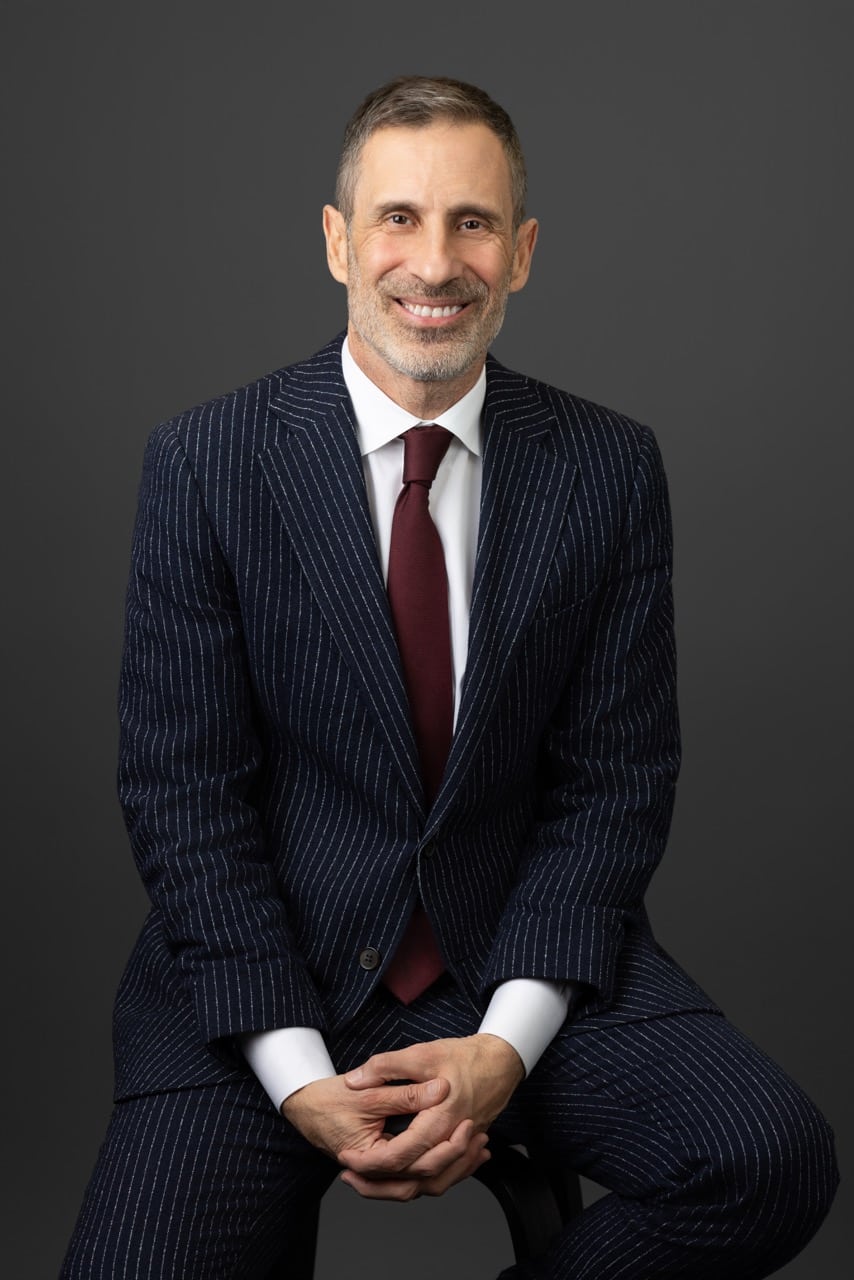
Edward Palermo, Esq.
Long Island Criminal & DWI Defense
What You Lose If the Refusal Is Sustained
If the ALJ sustains the refusal, the consequences are automatic and they come from DMV, not from the court.
- Revocation of at least one year for a first refusal. Longer for repeat incidents, and substantially longer for commercial drivers.
- A civil penalty of $500, which rises to $750 if this is a second refusal within five years or you have a VTL § 1192 conviction within the past five years.
- A $750 driver responsibility assessment, billed as $250 a year for three years. Miss a payment and DMV suspends you again.
- No conditional license while the criminal case is pending. This is the part that hurts most.
That last point deserves its own sentence, because it is the difference nobody explains at the roadside. A driver who takes the test and fails can usually get a pre-conviction conditional license after 30 days and drive to work, school, and medical appointments. A driver who refuses and loses the hearing generally cannot. The hardship and conditional pathways that carry other DWI defendants through their cases do not apply the same way after a sustained refusal. If your criminal case then takes eight or ten months, you are looking at that entire period with no driving privileges at all.
Did you refuse the breath test in Nassau County?
The hearing date comes fast and the deadlines are short. Tell me what happened and I’ll text you back personally, usually within the hour.
click here to text my cell
TEXT ED NOW
Suffolk (631) 265-1052
Nassau (516) 280-2160
Why Refusing Does Not Make the Criminal Case Go Away
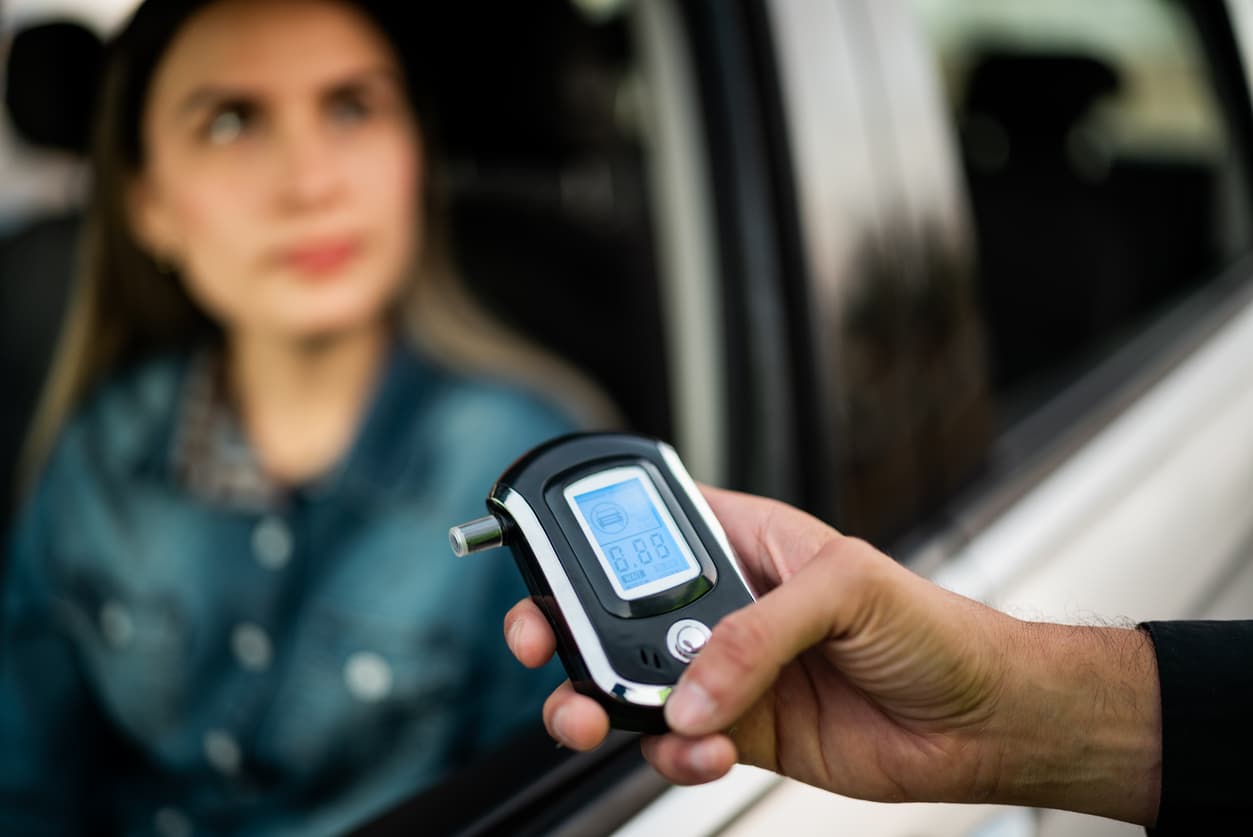
Refusing a breath test in Nassau County sets a DMV refusal hearing in motion — a separate proceeding from your criminal case, with your license on the line.
The most common belief I hear is that without a number there is no case. It is understandable and it is wrong.
The Nassau County District Attorney can prove driving while intoxicated under VTL § 1192(3) with no chemical test at all. Observations of your driving, the officer’s description of your appearance and speech, body worn camera footage, field sobriety test performance, and anything you said at the scene are all available to them. Prosecutors in this county try common law intoxication cases regularly.
Worse, if the warnings were properly given, your refusal itself is admissible against you as evidence of consciousness of guilt. The prosecutor gets to argue to a jury that you turned the test down because you knew what it would show. So refusing does not remove evidence from the case so much as trade one kind of evidence for another.
None of which means refusing was necessarily the wrong call. That question depends on facts you could not have known in the moment, and it is behind you now. What is in front of you is two proceedings that both need to be defended.
How the Refusal Hearing Can Win You the Criminal Case
Here is the strategic piece that separates a refusal case handled well from one handled adequately.
At the DMV hearing, the arresting officer testifies under oath, on the record, and I get to cross examine. In a Nassau criminal case, that opportunity would not otherwise come until a suppression hearing or trial many months later. The refusal hearing hands it to you early, before the officer has been prepared for the criminal proceeding and before the paperwork has been smoothed over.
Every answer the officer gives is locked in. If the testimony at the DMV hearing conflicts with the refusal report, the arrest paperwork, the body worn camera, or what the officer later says in Hempstead, that inconsistency becomes impeachment material. I have used testimony from a refusal hearing to undermine an officer’s credibility in the criminal case more times than I can count.
That is why waiving the hearing to avoid the trouble of showing up is almost always a mistake. Even in a case where the refusal will likely be sustained, the hearing is free discovery you cannot get any other way.
How I Handle a Nassau County Refusal
The first thing I do is calendar the hearing window and watch whether DMV meets it. If the hearing does not happen inside 15 days and the delay is not ours, I press to have your license restored pending the rescheduled hearing and its disposition, which in an adjourned case can mean you are driving legally for months.
Then I build both files at once. On the DMV side I attack each of the four findings, starting with the stop itself, because an unlawful stop ends the hearing before the refusal question is ever reached. I look hard at the warnings, since the statute requires clear language and officers frequently deliver them badly, in a noisy precinct, to someone who has just been handcuffed. I look at whether what happened was actually a persistent refusal or a request for counsel, a medical inability, or a delay that changed nothing.
On the criminal side I go after the stop, the arrest, and the officer’s observations, and I hold the People to their discovery obligations. If a chemical test was eventually administered, I demand the full testing file. Where the reading is elevated, the case may also be charged as aggravated DWI in Nassau County, which changes the negotiating posture considerably.
And I handle your case myself. You will not be meeting your lawyer for the first time on a Webex call. For the statewide procedural framework that applies in every county, see my Long Island DMV refusal hearing page. If your arrest was in Long Beach rather than elsewhere in the county, my Long Beach DWI page covers how cases move through that court.
Frequently Asked Questions
Where is my Nassau County refusal hearing held?
Nowhere physical. DMV chemical test refusal hearings are conducted remotely by Webex, so you will not travel to a hearing office or a courthouse, and you should ignore the street addresses still circulating online that point to former hearing sites in Hempstead or Garden City. You should also set aside the assumption that a local judge will hear you. The DMV is a state agency and the refusal calendar is statewide, meaning the Administrative Law Judge assigned to your case may sit in Buffalo, Albany, or anywhere else in New York. Your criminal DWI case is entirely separate and is local, heard in person at the Nassau County District Court, 99 Main Street, Hempstead, and prosecuted by the Nassau County District Attorney’s office.
What is the 15 day rule in a New York refusal case?
DMV must provide your chemical test refusal hearing within 15 days of your arraignment. If it does not, your license is restored, and it remains restored pending both the rescheduling of the hearing and its final disposition. This is far more valuable than most people realize. You are not getting a few days of driving back, you are getting your privileges until the hearing actually occurs and is decided, which in an adjourned Nassau case can run for months. The one exception is where you or your attorney requested the adjournment, which is why adjournments in refusal cases should never be sought casually. The restoration is not always applied automatically, so it often has to be pressed.
What happens if I do not show up to my refusal hearing?
Failing to appear waives your right to the hearing. The Administrative Law Judge proceeds without you, the refusal is sustained, and the revocation takes effect. Undoing that requires petitioning the Commissioner to reopen a hearing you were already entitled to have, which is far harder than appearing would have been. Because these hearings run on Webex, failing to appear can be as simple as never opening the link or losing your connection, so test the technology in advance and log on early. Do not skip the date because you assume the outcome is inevitable either. Even in a case likely to be sustained, appearing lets your lawyer cross examine the arresting officer under oath, and that testimony frequently becomes valuable evidence in the criminal case in Hempstead.
Can I lose my license even if my criminal DWI case is dismissed?
Yes, and this surprises almost everyone. The DMV refusal proceeding and the criminal DWI case are legally independent. The refusal hearing decides only whether the stop was lawful, whether there was reasonable cause, whether you were properly warned, and whether you refused. It does not decide whether you were intoxicated or whether you are guilty of anything. If the Administrative Law Judge sustains the refusal, your license is revoked for at least one year even if the Nassau County District Attorney later dismisses the criminal charge entirely, and even if you are acquitted at trial. This is why the DMV side of a refusal case has to be defended on its own terms from the beginning.
What must the DMV prove at a chemical test refusal hearing?
The Administrative Law Judge decides four questions under VTL § 1194. First, whether the police had a lawful basis to stop your vehicle. Second, whether there was reasonable cause to believe you were driving in violation of § 1192. Third, whether you were given clear warnings, in plain language, of the consequences of refusing. Fourth, whether you actually refused, meaning a persistent refusal rather than hesitation or confusion. The DMV must establish all four by a preponderance of the evidence, a far lower standard than the criminal court’s beyond a reasonable doubt. If any single element fails, the refusal is not sustained and your license is not revoked on that basis.
How long is a license revoked for refusing a breath test in New York?
A first sustained chemical test refusal carries a revocation of at least one year. The period is longer for repeat incidents, and commercial drivers face significantly harsher outcomes that can include lengthy or permanent disqualification of the commercial privilege. Drivers under 21 are handled under separate Zero Tolerance provisions. Importantly, the revocation is not the whole picture. You will also owe a civil penalty and a driver responsibility assessment, and you generally cannot obtain a conditional license while your criminal case remains open. That combination means a sustained refusal often produces a longer stretch without driving than a DWI conviction with a chemical test result would have.
What does a refusal cost in fines and penalties?
A sustained first refusal carries a civil penalty of $500 payable to DMV. That penalty increases to $750 if this is your second chemical test refusal within five years, or if you have been convicted of any subdivision of VTL § 1192 within the past five years. Separately, every refusal triggers New York’s driver responsibility assessment of $750, billed as $250 per year for three years. Failing to pay the assessment results in another suspension. All of these are administrative and are owed to DMV regardless of what happens in criminal court, and they are entirely separate from any fine, surcharge, or cost the Nassau County District Court imposes if you are convicted.
Can I get a conditional license after refusing the breath test?
Generally not while your criminal case is still pending, and this is the harshest practical consequence of a sustained refusal. A driver who took the test and failed can usually apply for a pre-conviction conditional license roughly 30 days into the suspension, which permits driving to work, school, medical appointments, and a limited set of other necessities. The hardship privilege and pre-conviction conditional license pathways do not operate the same way after a refusal is sustained. If your Nassau County case then takes eight or ten months to resolve, you may be without any driving privileges for that entire period. Fighting the refusal at the hearing is often the only route to avoiding that.
Does refusing the test mean the prosecution has no case?
No. The Nassau County District Attorney can prove driving while intoxicated under VTL § 1192(3), the common law count, without any chemical test whatsoever. The proof consists of the driving pattern, the officer’s observations of appearance, speech, balance and odor, field sobriety test performance, body worn camera footage, and any statements you made. Prosecutors in Nassau try these cases regularly. On top of that, if the refusal warnings were properly administered, the refusal itself is admissible against you as evidence of consciousness of guilt, meaning the prosecutor can argue you declined the test because you knew the result. Refusing trades one form of evidence for another rather than eliminating the case.
Is asking for a lawyer before the test a refusal?
Not automatically, and this is one of the most productive issues at a Nassau refusal hearing. New York gives a driver a limited right to consult counsel before deciding on the chemical test, provided doing so does not unreasonably delay administration. Where an officer treats a request for a lawyer as an immediate refusal, or gives the driver no realistic opportunity to make a call, that finding can fail. The same is true where confusion was created by the officer’s own statements. What the record shows about timing, what was asked, and what the officer said in response often decides the issue, which is why the body worn camera footage matters so much in these cases.
What if a medical condition kept me from giving a breath sample?
An inability to provide an adequate sample is not the same thing as a refusal, though officers routinely record it as one. Asthma, COPD, recent surgery, injuries from the crash itself, and various respiratory and cardiac conditions can all make it genuinely impossible to produce the sustained breath volume the instrument requires. If the record shows you were attempting to comply and physically could not, that is a defense to the refusal finding. Medical records, prescription history, and treating physician documentation matter here, and because the hearing runs on Webex, those records need to be gathered and submitted well before the date rather than produced on camera. If this applies to you, tell your attorney immediately rather than waiting until the hearing.
Should I hire separate lawyers for the DMV hearing and the criminal case?
No, and doing so usually costs you the biggest strategic advantage in a refusal case. The two proceedings are legally independent but tactically connected. At the refusal hearing the arresting officer testifies under oath and can be cross examined months before that opportunity would arise in the criminal case in Hempstead. Testimony given at the DMV hearing that conflicts with the refusal report, the arrest paperwork, or later testimony becomes impeachment material in criminal court. Capturing that requires one attorney handling both files, who knows exactly which answers will matter later. Splitting the representation means the lawyer asking the questions is not the lawyer who will need the answers.
Talk to Me Before Your Hearing Date
Refusal cases move faster than people expect and the early decisions have consequences that last a year or longer. The 15 day window, the restoration of your license if DMV misses it, and the questions put to the officer at the hearing all happen in the first weeks, usually before most people have finished absorbing what happened to them.
I have defended more than 2,000 clients across Nassau and Suffolk over 31 years, and I have never worked for the other side. For the full picture of how I defend drunk driving cases in this county, including refusals, breath test cases, and felony charges, see my Nassau County DWI lawyer page, or look through my case results.
Your hearing date is already on the calendar.
Free and confidential. I answer my own phone, and I’ll tell you honestly where you stand in both cases.
click here to text my cell
TEXT ED NOW
Suffolk (631) 265-1052
Nassau (516) 280-2160
7-Time Winner