


DMV Refusal Hearing Lawyer Long Island | 31+ Years | Ed Palermo
Page Author & Legal Reviewer: Edward Palermo, Esq. | Last Verified: June 2026
Edward Palermo is a premier Long Island criminal defense attorney with 31+ years of daily trial practice across Nassau and Suffolk Counties. Devoting his practice exclusively to criminal trial defense, he is a 7-time Best Lawyer on Long Island (2019-2024 & 2026). Lifelong defender. Never a prosecutor.
DMV Refusal Hearing Lawyer Long Island
You Refused the Breathalyzer. Now What?
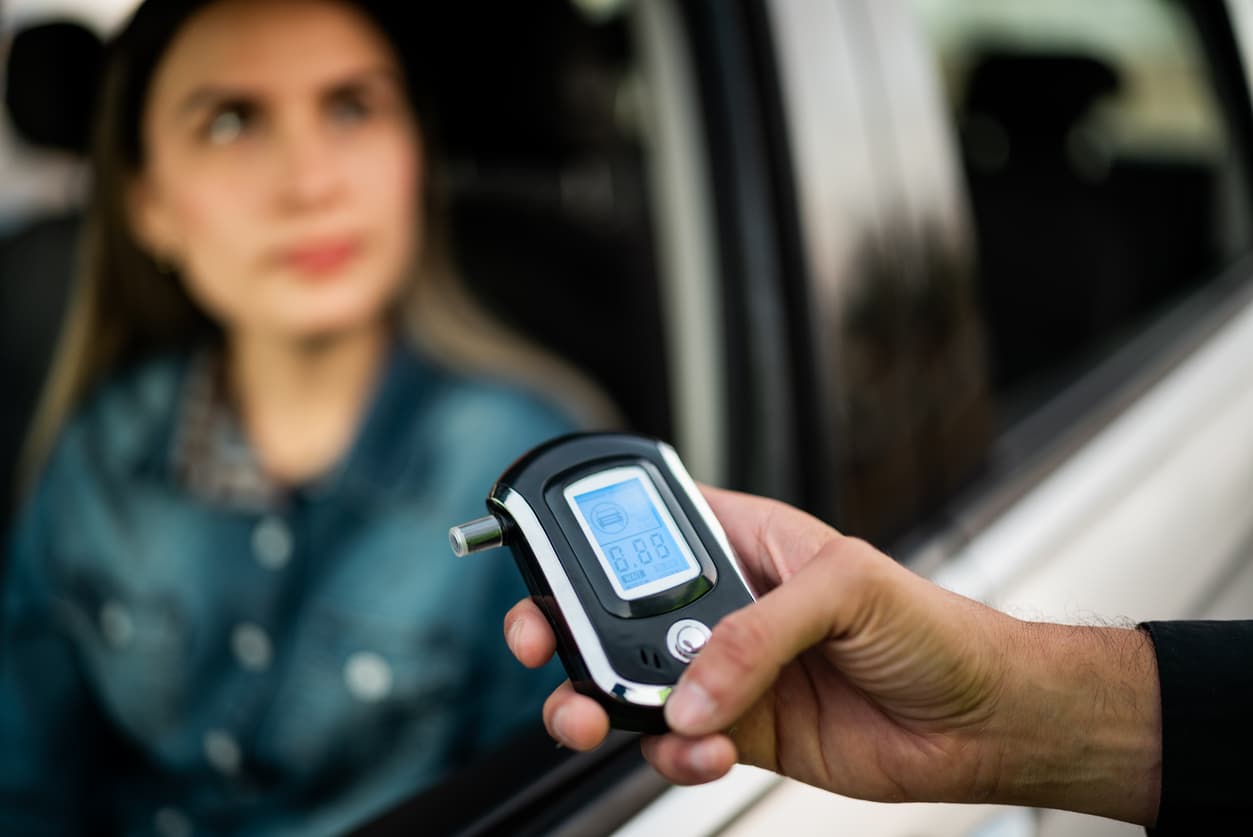 You were pulled over. The officer asked you to take a breath test. You said no. Maybe you thought refusing would help your case. Maybe you panicked. Maybe you just did not want to give the police evidence against you.
Whatever your reason, refusing the chemical test in New York triggers an entirely separate legal proceeding called a DMV Refusal Hearing. This proceeding has its own timeline, its own penalties, and its own consequences for your license. It happens whether or not you are ever convicted of DWI.
I am Ed Palermo, and I have been handling DWI cases on Long Island for more than 31 years. I have represented clients at hundreds of DMV refusal hearings in Nassau and Suffolk Counties. I know what the Administrative Law Judges look for, I know how to challenge the police officer’s testimony, and I know how to give you the best chance of keeping your license.
The DMV moves fast on refusal cases. You need to act now.
Text Ed Directly: (631) 903-3733
Two Separate Cases: DMV and Criminal Court
Here is what trips up a lot of people. When you refuse the breath test, you are facing two separate legal proceedings that run on parallel tracks.
The Criminal Case is prosecuted by the District Attorney in criminal court. This determines whether you are guilty of DWI and what criminal penalties you will face including fines, jail, probation, and a permanent criminal record.
The DMV Administrative Case is a civil proceeding before an Administrative Law Judge. This determines whether your license will be revoked for refusing the test. The DMV can revoke your license even if your criminal case is dismissed.
Let me say that again because it is important: The DMV can take your license even if you are never convicted of DWI. The two cases are completely independent. Winning one does not automatically win the other.
You need to defend both. The strategic interplay between these two parallel tracks is what separates an experienced Long Island DWI lawyer from a general practitioner. Decisions on one track affect outcomes on the other, and the timing of one case can dramatically change what is possible in the other.
What Happens After You Refuse: The Statewide Timeline
The DMV refusal hearing process is governed by New York State law, which means the procedural rules are identical whether your case is in Nassau or Suffolk County. Here is exactly what happens after a refusal.
At Arraignment (Your First Court Appearance)
The court will temporarily suspend your driving privileges under VTL § 1194(2)(b)(3). This happens automatically in refusal cases. You will walk out of arraignment without a valid license.
The 15-Day Rule (This Actually Favors You)
The DMV is required to schedule your refusal hearing within 15 days of your arraignment. Most clients hear “15 days” and panic. They should not.
This rule actually favors the respondent. If the DMV fails to provide the hearing within that 15-day window, your driving privileges are restored pending the rescheduling of the hearing. That means you keep driving while the DMV gets its act together. This is a statutory protection built into the system to prevent the state from holding your license hostage indefinitely without due process.
In my 31 years of practice, I have used this 15-day rule strategically more times than I can count. If we are not granted the hearing on time, I move immediately to restore driving privileges while we prepare the defense for the rescheduled hearing.
The Refusal Hearing Itself
This is an administrative hearing before a DMV Administrative Law Judge (ALJ). It is not your criminal trial. The rules are different, the standard of proof is different, and the consequences are different.
Since Covid, these hearings are conducted virtually through WebEx, a video platform similar to Zoom. You, your attorney, the ALJ, and the arresting officer all appear by video. The police officer who arrested you will testify under oath. You have the right to be represented by an attorney, to cross-examine the officer, and to present your own evidence.
What the DMV Must Prove
At the refusal hearing, the DMV must prove four things by a preponderance of the evidence (meaning “more likely than not”):
- Reasonable Grounds for the Stop and Investigation. Did the officer have reasonable grounds to believe you were driving while intoxicated? This is similar to probable cause. The officer will point to things like erratic driving, odor of alcohol, slurred speech, bloodshot eyes, or poor performance on field sobriety tests.
- Lawful Arrest. Were you lawfully arrested for DWI? If the stop itself was illegal, or if the officer lacked probable cause to arrest you, the refusal may not be sustained.
- Proper Refusal Warnings. Were you clearly warned in unequivocal language that refusing the test would result in license revocation and civil penalties? The officer is required to read you specific refusal warnings. If the warnings were unclear, incomplete, or not given at all, this is a basis to challenge the refusal.
- Actual Refusal. Did you actually refuse the chemical test? This sounds straightforward, but it is often contested. Confusion, language barriers, medical conditions, or equipment problems can all affect whether what happened qualifies as a refusal under the law.
If the DMV fails to prove any one of these four elements, the refusal should not be sustained and your license should be restored.
CLICK HERE TO TEXT MY CELL: (631) 903-3733
Refusal Hearing Penalties
If the Administrative Law Judge sustains the refusal, you face significant penalties.
First Refusal
| Penalty | Amount/Duration |
|---|---|
| License Revocation | Minimum 1 year |
| Civil Penalty | $500 |
| Driver Responsibility Assessment | $250 per year for 3 years ($750 total) |
Second Refusal (or Refusal with Prior DWI Within 5 Years)
| Penalty | Amount/Duration |
|---|---|
| License Revocation | Minimum 18 months |
| Civil Penalty | $750 |
| Driver Responsibility Assessment | $250 per year for 3 years ($750 total) |
Commercial Driver (CDL Holder)
| Penalty | Amount/Duration |
|---|---|
| CDL Disqualification | Minimum 18 months (first refusal) |
| Second Refusal | Permanent CDL loss |
| Civil Penalty | $550 |
Critical Point: These penalties apply even if your criminal DWI case is later dismissed or reduced. The DMV case stands on its own.
No Conditional License During Pending Criminal Case
This is where refusal cases really hurt, and where most attorneys miss critical strategic considerations.
When you take the breath test and fail, you face a temporary suspension. After 30 days, you can typically apply for a pre-conviction conditional license that lets you drive to work, school, and medical appointments.
When you refuse the test and lose your refusal hearing, you generally cannot get a conditional license while your criminal case is still pending.
The hardship privilege and pre-conviction conditional license options that help other DWI defendants do not apply the same way in refusal cases. If the refusal is sustained and the criminal case is still open, you are looking at a full year (or more) without any driving privileges at all.
This is exactly why fighting the refusal hearing matters so much, and why the strategic coordination with your criminal case is critical.
The Strategic Balancing Act: Criminal Case vs. Refusal Hearing
Here is the part that separates an experienced Long Island DWI lawyer from a general practitioner. The criminal case and the refusal hearing run on parallel tracks, and decisions made on one track directly affect outcomes on the other.
The Tension
On one hand, you want to resolve the criminal case quickly. Why? Because if you lose the refusal hearing and trigger the automatic one-year revocation, having the criminal case already resolved means you have at least one path to driving privileges through a conditional license tied to the criminal disposition.
On the other hand, stretching the criminal case out longer sometimes leads to a far better disposition. Prosecutors may be more flexible six months into a case than they were at arraignment. New legal issues may emerge. Witnesses may become unavailable. Discovery may reveal problems with the state’s case.
How I Approach the Decision
Speed or patience? The answer is not the same for every client. It depends on:
- The strength of the refusal hearing case (can we win it?)
- The strength of the criminal case (can we win at trial?)
- The client’s personal circumstances (employment, family obligations)
- Whether the client absolutely needs to drive (commercial driver, sole household earner)
- The specific prosecutor handling the criminal case and their flexibility
- The specific Administrative Law Judge assigned to the refusal hearing
- Whether there are constitutional issues that could collapse both cases
This is judgment built over 31 years of doing this work every week. It is not a decision that can be made by a junior associate or an attorney unfamiliar with how both systems operate.
The Stay of Execution Strategy (Most Attorneys Do Not Know This)
Even losing the refusal hearing is not the end of the road. This is where one of my most valuable strategic tools comes into play, and it is a strategy that most attorneys do not understand how to properly execute.
When the Administrative Law Judge rules against you and sustains the refusal, you have the right to appeal the decision to the DMV Appeals Board. More importantly, you can request a stay of execution of the revocation pending that appeal.
How the Stay Works
A successful stay request keeps you driving while the appeal is processed. The appeals process can take months, sometimes longer. That breathing room is often the difference between a client losing their job and being able to continue working while we fight the case.
The stay is not automatic. It must be requested properly, supported by legal arguments demonstrating both the merit of the appeal and the hardship that immediate revocation would cause. Most attorneys do not know how to draft an effective stay application. I have refined this strategy over decades of practice and have successfully obtained stays for clients facing critical driving needs.
Why This Matters Strategically
The stay of execution is one of the most underutilized tools in DWI defense for several reasons:
- Most attorneys do not realize the appeal option exists at all
- Most attorneys who know about the appeal do not understand how to request a stay
- The window for filing is tight and requires immediate action after the ALJ ruling
- The legal arguments supporting the stay require specific knowledge of administrative law and DMV procedure
The combination of knowing how to attack the refusal hearing, knowing when to push for a stay of execution on appeal, and knowing how to coordinate all of it with the strategic timing of your criminal case is what separates real DWI defense work from attorneys who simply show up to court and hope for the best.
Common Defenses at DMV Refusal Hearings
Every refusal case is different, but here are the defenses I explore in every case.
Challenging the Traffic Stop
If the officer had no valid reason to pull you over in the first place, everything that followed including the arrest and the refusal may be tainted. I examine:
- What was the stated reason for the stop?
- Was there actually a traffic violation?
- Is there dashcam or bodycam footage that contradicts the officer’s account?
- Were the stated grounds for stopping the vehicle constitutionally sufficient?
Challenging Probable Cause for Arrest
Even if the stop was valid, the officer needed probable cause to arrest you for DWI. I look at:
- What observations did the officer actually make?
- Were field sobriety tests administered properly according to NHTSA guidelines?
- Could there be innocent explanations for the officer’s observations?
- Were any of the “indicators” the officer claims to have observed actually visible in the video footage?
Challenging the Refusal Warnings
The officer must give you clear, specific warnings about the consequences of refusing. If the warnings were:
- Not given at all
- Given in a confusing or incomplete way
- Given in a language you do not understand
- Drowned out by noise or other distractions
- Given outside the proper time frame
Then the refusal may not be valid.
Challenging Whether You Actually Refused
Not every “no” is a legal refusal. I examine:
- Were you confused about what was being asked?
- Did you have a medical condition that prevented you from completing the test?
- Was there a language barrier?
- Did you initially agree but then face equipment problems?
- Did you ask questions or request to speak with an attorney (which is your right)?
- Was the police officer’s documentation of the refusal consistent with what actually happened?
Sometimes what the officer calls a refusal is not actually a refusal under the law.
Officer Fails to Appear
If the arresting officer does not show up for the hearing, the ALJ will typically lift your suspension and adjourn the hearing to a new date. This does not end the case, but it restores your ability to drive while we wait for the rescheduled hearing.
Strategic Use of the Refusal Hearing for the Criminal Case
Beyond defending your license, the refusal hearing serves a critical strategic purpose for your criminal case. The hearing provides a rare opportunity to cross-examine the arresting officer under oath months before any criminal trial.
The testimony locked in at the refusal hearing becomes powerful impeachment material for the criminal case. Officers who tell one version at the refusal hearing and a different version at the criminal trial give us tremendous leverage. I treat every refusal hearing as a discovery opportunity, asking detailed questions designed to lock in officer testimony that will help us at the criminal trial.
This is another reason why having an attorney who handles both the refusal hearing and the criminal case is essential. The strategic value of cross-examination at the refusal hearing is lost if your refusal hearing attorney is not also the one preparing your criminal defense.
Can My Refusal Be Used Against Me in Criminal Court?
Yes, potentially. Under VTL § 1194(2)(f), the prosecutor can introduce evidence of your refusal as “consciousness of guilt,” essentially arguing that you refused because you knew you were intoxicated.
But there are important limits:
- The refusal warnings must have been properly given
- The refusal must have occurred within the two-hour chemical test window
- “Unintentional” failures to complete the test may be treated differently
- The refusal must be admissible under the rules of evidence
This is another reason why the refusal hearing matters. How we handle the DMV case can affect what happens in your criminal case. The cross-examination of the officer at the DMV hearing can reveal weaknesses that help us later in criminal court, and the legal record we create at the refusal hearing can be used to challenge the admissibility of refusal evidence at trial.
CLICK HERE TO TEXT MY CELL: (631) 903-3733
“I Refused, So They Cannot Prove I Was Drunk, Right?”
I hear this a lot. The logic seems sound. No breath test means no BAC number, which means no proof of intoxication.
Unfortunately, it is not that simple.
Prosecutors can still build a DWI case using:
- Officer observations (slurred speech, bloodshot eyes, odor of alcohol, unsteady gait)
- Your driving pattern before the stop
- Your performance on field sobriety tests
- Any statements you made
- Dashcam or bodycam video
- Witness testimony
- Drug Recognition Expert (DRE) evaluations if drugs are suspected
On top of that, your refusal itself can be used as evidence that you knew you were intoxicated.
The decision to refuse is a tradeoff. It eliminates the BAC number but creates other problems. Whether it was the right call depends on facts you only know in hindsight. What matters now is defending both cases as aggressively as possible.
What to Do Right Now
If you refused the breath test, here is your action plan:
- Do not drive on a suspended license. I know this is hard, especially if you need to get to work. But driving on a suspended license creates new criminal charges and makes everything worse.
- Call me immediately. The DMV hearing must be scheduled within 15 days of your arraignment. If we act fast, we may be able to get your suspension lifted for procedural reasons while we prepare your defense.
- Write down everything you remember. What did the officer say? What did you say? Were you confused about anything? Did you have any medical issues? Were the warnings clear? These details matter.
- Gather any documents. Proof of work, school, or medical appointments may matter at later stages of your case, even if they do not create a conditional license in a refusal case.
- Preserve any evidence. If there was dashcam footage, witness contact information, or anything else relevant, document it now before it disappears.
- Do not discuss your case with anyone except me. What you tell friends or family can potentially be used against you. Keep the details between us.
Why a Lifelong Defender Matters in Refusal Cases
Some people think the DMV hearing is “just administrative” and not as important as the criminal case. That is a serious mistake.
The refusal hearing determines whether you will be able to drive for the next year or more. For most people, losing their license means losing their ability to work, care for their family, and live their life.
The hearing also creates a permanent record. The officer’s testimony can be used in your criminal case. How we handle the cross-examination, what we get the officer to admit or contradict, can affect the outcome of your DWI prosecution.
I have spent my entire 31-year career on one side of the courtroom. I have never been a prosecutor. I have never worked for the District Attorney’s office. My loyalty has never been divided. When you hire a lifelong defender, you get an attorney whose entire professional identity is built around protecting clients from the power of the state.
I know what questions to ask. I know what inconsistencies to look for. I know how to challenge the officer’s account and expose weaknesses in the DMV’s case. I know how to coordinate the refusal hearing strategy with your criminal defense. And I know how to deploy the stay of execution strategy if the initial hearing does not go our way.
Frequently Asked Questions About DMV Refusal Hearings
How does the 15-day rule actually work?
After your arraignment, the DMV is required to schedule your refusal hearing within 15 days. This rule actually favors you. If the DMV fails to schedule the hearing in time, your driving privileges are restored pending the rescheduling. This is one of the first procedural opportunities we look for in every refusal case.
Can I appeal a DMV refusal hearing loss?
Yes. An adverse decision from the Administrative Law Judge can be appealed to the DMV Appeals Board. More importantly, you can request a stay of execution of the revocation while the appeal is pending. A successful stay request keeps you driving while the appeal is processed, which can take months. This is a strategy I have refined over 31 years of practice and one of the most underutilized tools in DWI defense.
What is a stay of execution on a refusal revocation?
A stay of execution is a legal order that pauses the enforcement of the revocation while you appeal the Administrative Law Judge’s decision. If granted, you keep your driving privileges while the DMV Appeals Board reviews your case. The stay must be properly requested with supporting legal arguments. Most attorneys do not know how to draft an effective stay application, which is why this strategy is so underutilized.
Can I get my refusal reversed?
If we win the DMV refusal hearing by showing that the stop was illegal, the warnings were not proper, or you did not actually refuse, the refusal will not be sustained and your license should be restored. This is exactly what we fight for at every refusal hearing.
What if the officer does not show up for the hearing?
If the officer fails to appear, the ALJ will typically lift your suspension and reschedule the hearing. You will get your license back temporarily, but the case is not over. We still need to prepare for the rescheduled hearing. This is an opportunity we monitor closely in every case.
Will I lose my license even if the DWI charge is dismissed?
Yes, potentially. The DMV refusal case is completely separate from your criminal case. You can win in criminal court and still lose your license through the DMV proceeding. This is exactly why both cases must be defended with equal intensity and strategic coordination.
Can I get a conditional license if I refused?
Generally, no, not while your criminal case is still pending. Refusal cases do not qualify for the same conditional license options available to other DWI defendants during the pendency of the criminal case. This is one of the harshest consequences of refusing. If the refusal is sustained, expect to lose all driving privileges for at least a year unless we successfully win the hearing or obtain a stay on appeal.
How does the refusal hearing affect my criminal case strategy?
The refusal hearing provides a rare under-oath cross-examination of the arresting officer months before any criminal trial. The testimony locked in at the refusal hearing becomes powerful impeachment material for the criminal case. The strategic coordination between the refusal hearing and the criminal case is essential, which is why you need one attorney handling both proceedings.
Are refusal hearings the same in Nassau and Suffolk Counties?
Yes, the procedural rules and statutory framework are identical statewide. However, the Administrative Law Judges and police officers vary by region. Nassau refusal hearings are typically processed through the DMV office in Hempstead, while Suffolk hearings are handled out of Hauppauge. The personalities and tendencies of specific ALJs matter, which is why local experience in both counties is valuable. For more on the differences between Nassau and Suffolk DWI prosecution, see my complete Nassau vs Suffolk County DWI comparison.
Should I have taken the test?
That is a complicated question that depends on facts you did not know at the time. What I can tell you is this. Whether you should have taken the test is in the past. What matters now is fighting for the best possible outcome in both your DMV case and your criminal case, and the strategic coordination between them.
Contact Ed Palermo Today
If you refused the breath test on Long Island, you need an experienced attorney who understands both the DMV refusal process and the criminal DWI system. The two cases are connected, and the strategy for one affects the other.
I have represented over 2,000 clients throughout my career, including more than 1,000 DWI cases. I have been voted Best Lawyer on Long Island seven times (2019-2024 and 2026). I was recognized as a Trailblazer by the New York Law Journal. I hold the prestigious “Superb” AVVO Rating.
More importantly, I answer my phone. When you call, you talk to me, not a receptionist, not a paralegal. I give every client my personal cell phone number because I know how stressful this situation is.
Call or text me today for a free consultation.
Suffolk County Office
1300 Veterans Memorial Hwy, Suite 320
Hauppauge, NY 11788
(631) 265-1052
Nassau County Office
1539 Franklin Avenue, Suite 104
Mineola, NY 11501
(516) 280-2160
East Hampton Office
9 Willow Lane
East Hampton, NY 11937
(631) 265-1051
CLICK HERE TO TEXT MY CELL: (631) 903-3733
Related Resources:
Long Island DWI Lawyer | Nassau County DWI | Suffolk County DWI | Nassau vs Suffolk DWI Comparison | Felony DWI Lawyer | Aggravated DWI | DWI Reduced to DWAI | What Is a DWAI in New York | Case Results
Legal Authority & Editorial Review: This guide was authored, reviewed, and legally verified by Edward Palermo, Esq., founder of Palermo Law P.L.L.C. With over 31 years of dedicated criminal defense practice across Nassau and Suffolk Counties, Mr. Palermo has handled hundreds of DMV refusal hearings and developed sophisticated strategies for coordinating refusal hearing defense with parallel criminal cases. Recognized as a 7-time Best Lawyer on Long Island (2019-2024 & 2026). Lifelong defender. Never a prosecutor. Page status verified: June 2026.
7-Time Winner