


If you hold a commercial driver’s license and you have been arrested, whether for DWI, a drug charge, or even a serious traffic offense in your own personal car, you are facing something a regular driver is not: your livelihood is on the line, not just your license. And in one part of Long Island right now, the rules for how these cases can be resolved are tougher than in the other, for reasons that are legally debatable.
Here is what a CDL holder needs to understand, and where an experienced defense actually makes a difference.
A CDL holder faces disqualification consequences that a regular driver never sees, and those consequences can attach even when the offense happened in a personal vehicle, off the clock. Protecting the license means protecting the career. I have defended CDL holders across Nassau and Suffolk for 31 years, and I handle these cases with the specific federal rules in mind from the first day. For how DWI cases work in each county, see my Nassau County DWI and Suffolk County DWI pages.
- 31+ Years defending drivers on Long Island
- 2,000+ Clients personally represented
- 7× Best Lawyer on Long Island
Why a CDL Changes Everything
For most drivers, a DWI or a drug conviction is a serious problem. For a CDL holder, it can be a career-ending one, because the commercial license carries its own separate layer of federal consequences on top of everything a regular driver faces.
A first DWI conviction, even in your personal vehicle, generally triggers a one-year disqualification of your commercial driving privileges. A second qualifying offense can mean a lifetime disqualification. If you were driving a commercial vehicle carrying hazardous materials at the time, the first-offense disqualification extends to three years. These are federal baseline consequences that apply on top of the ordinary New York license penalties, and they do not care that you were off duty or in your own car when it happened.
The trap most CDL holders don’t see comingThe disqualification consequences attach because you hold a CDL, not because you were driving a commercial vehicle. A DWI in your personal car, on a weekend, off the clock, can still cost you your commercial driving privileges and your job. Many drivers do not realize this until it is too late.
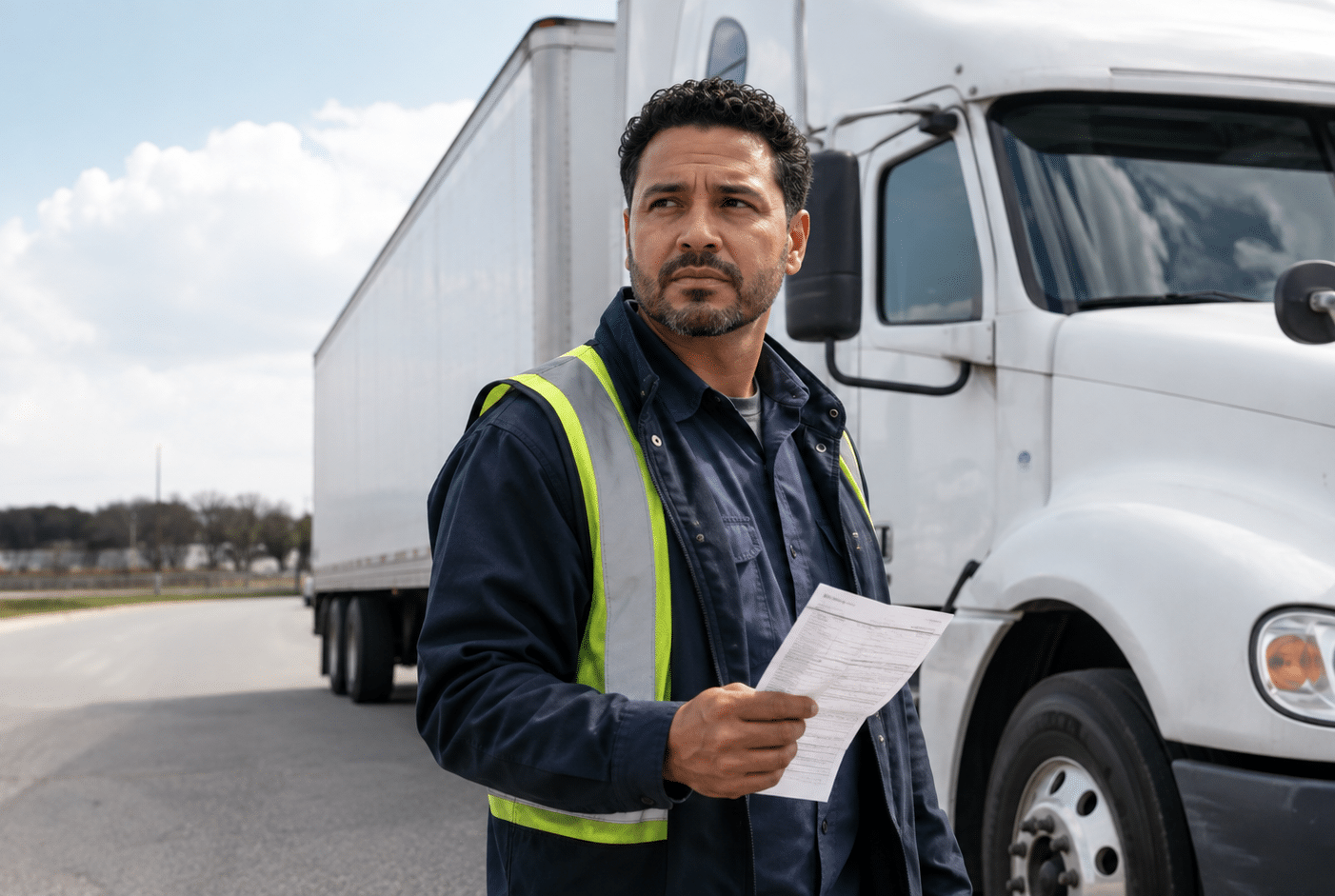
A commercial driver’s license is more than permission to drive. For many CDL holders, it is their livelihood, and a criminal or serious traffic charge can put that career at risk.
The Anti-Masking Rule, and Why It Matters to You
Here is where CDL cases get genuinely complicated, and where the county you are in currently makes a real difference.
There is a federal regulation, 49 CFR § 384.226, known as the anti-masking rule. It prohibits a state from masking, deferring judgment on, or diverting a CDL holder’s conviction so that it does not appear on the national commercial driving record. Its purpose is highway safety: to keep unsafe commercial drivers from hiding violations across state lines. And it applies to CDL holders even when they are driving a personal vehicle.
Prosecutors sometimes read this rule to mean they cannot offer a CDL holder any reduction at all. But there is a strong argument, one widely held in the defense bar, that this reads the regulation too broadly. The rule prohibits masking a conviction. It does not, by its terms, prohibit plea bargaining that resolves a charge before any conviction is entered. Federal guidance and even national prosecutor resources have recognized that a charge reduced before a judgment of guilt is pronounced is not “masking,” because there was never a conviction to mask.
The anti-masking rule bars hiding a conviction. It does not, in my view and that of much of the defense bar, bar negotiating a charge down before any conviction exists. That distinction can be the difference between a driver keeping his career and losing it.
Edward R. Palermo, Esq.
Long Island Criminal & DWI Defense
I want to be careful and honest here rather than sell you a guarantee. This is a contested area. Some prosecutors accept the pre-conviction distinction; others take a more conservative stance and will not reduce CDL cases at all. How your case can be resolved depends heavily on the county, the specific prosecutor, and the facts, and on Long Island right now the two counties are not the same.
Nassau and Suffolk Are Treating This Differently Right Now
This is the practical reality every Long Island CDL holder should know, because it can determine the outcome.
In Nassau County, I have been able to negotiate charge reductions for CDL holders where the facts and the law supported it. In one recent case, I represented a career truck driver, well into his working life with few alternative options, whose charge was ultimately reduced, after an interim period of good conduct, to a simple speeding ticket, an outcome that protected his commercial license and his livelihood.
Suffolk County has more recently taken a considerably more conservative position. The Suffolk District Attorney’s office has adopted a policy of not reducing charges involving driving for individuals who hold a CDL, even when the driving occurred in a non-commercial, personal vehicle. The office’s view appears to be grounded in a cautious reading of the federal masking regulation and a concern about protecting federal highway funding.
Many of us in the defense bar respectfully disagree with how broadly that policy reads the regulation, for the reasons above: the anti-masking rule addresses convictions, not pre-conviction plea negotiations. But it is important to be realistic. A policy is a policy, and while the underlying legal question is contestable, a CDL holder charged in Suffolk today may face a far more rigid posture than the same driver would in Nassau. That makes the defense strategy, and the willingness to litigate the case rather than simply accept a plea to the charge, even more important there.
Hold a CDL and facing a charge on Long Island?
Your career is on the line, and the county you’re in matters. Tell me what happened and I’ll text you back personally, usually within the hour.
click here to text my cell
TEXT ED NOW
Suffolk (631) 265-1052
Nassau (516) 280-2160
What Counts as a Disqualifying Offense
The consequences are not limited to DWI. Federal rules disqualify CDL holders for a range of “major offenses,” and the list is broader than most drivers expect.
- Driving while intoxicated, in a commercial or personal vehicle
- Refusing a chemical test
- Leaving the scene of an accident
- Using a vehicle to commit a felony, including certain drug offenses
- Driving a commercial vehicle with a revoked, suspended, or canceled CDL
A conviction for certain drug felonies involving a motor vehicle can carry its own disqualification, which is why a CDL holder facing a drug charge, not just a DWI, needs a defense built with the commercial license in mind. The interaction between the criminal case and the CDL consequences is where these cases are won or lost.
How I Defend a CDL Case
I start from the premise that the goal is not just a good criminal outcome, it is protecting the commercial license and the career behind it, which sometimes points to a different strategy than I would use for a non-CDL client.
That means analyzing whether the stop and the evidence can be challenged, because in a CDL case a suppression issue or a genuine evidentiary weakness is often the cleanest path, since a dismissal or a pre-conviction reduction avoids the disqualification entirely. It means knowing the county’s posture and the individual prosecutor, and being prepared to litigate rather than accept a plea to the charge, particularly in a county with a rigid no-reduction policy. And it means understanding the federal disqualification framework well enough to make sure a resolution that looks acceptable on the criminal side does not quietly end the client’s career on the CDL side. I handle every one of these cases personally.
Frequently Asked Questions
Can I lose my CDL for a DWI in my personal car?
Yes. This surprises many drivers, but the federal disqualification rules attach because you hold a commercial driver’s license, not because you were driving a commercial vehicle. A DWI conviction in your personal car, even off duty on a weekend, generally triggers a one-year disqualification of your commercial driving privileges, and a second qualifying offense can result in a lifetime disqualification. This is on top of the ordinary New York license penalties every driver faces. Because your career is at stake in a way a regular driver’s is not, a CDL DWI needs to be defended with those commercial consequences in mind from the very first day.
How long is a CDL disqualified after a first DWI?
A first major offense, including DWI, generally disqualifies a CDL for one year. If you were operating a commercial vehicle transporting hazardous materials at the time of the offense, the first-offense disqualification extends to three years. A second major offense can carry a lifetime disqualification, though there are limited circumstances in which a lifetime disqualification may be reduced after a period of years. These are federal baseline consequences that apply in addition to New York’s own license revocation or suspension, which is why the total impact on a CDL holder is far more severe than on an ordinary driver.
What is the anti-masking rule?
The anti-masking rule is a federal regulation, 49 CFR 384.226, that prohibits states from masking, deferring judgment on, or diverting a CDL holder’s traffic conviction so that it does not appear on the national commercial driving record. Its purpose is to keep unsafe commercial drivers from hiding violations across state lines, and it applies even when the CDL holder is driving a personal vehicle. Importantly, the rule addresses hiding a conviction. There is a strong argument, widely held in the defense bar, that it does not by its terms prohibit plea bargaining that resolves a charge before any conviction is ever entered.
Does the anti-masking rule mean my charge can’t be reduced?
Not necessarily, though some prosecutors read it that way. The rule prohibits masking a conviction, and a strong argument, supported by federal guidance and even national prosecutor resources, holds that reducing a charge before any judgment of guilt is entered is not masking, because there was never a conviction to hide. That said, this is a contested area. Some prosecutors accept the pre-conviction distinction and will negotiate; others take a conservative stance and decline to reduce CDL cases at all. How your case can be resolved depends on the county, the individual prosecutor, and the facts, which is why experienced, county-specific representation matters so much.
Why is Suffolk County treating CDL cases differently from Nassau?
The two counties have taken different approaches to CDL plea negotiations. Suffolk County has more recently adopted a policy of not reducing driving-related charges for CDL holders, even when the driving occurred in a personal vehicle, apparently based on a cautious reading of the federal masking regulation and concern about federal highway funding. Nassau has been more willing to negotiate reductions where the facts and law support them. Much of the defense bar believes the conservative reading over-applies a rule that addresses convictions rather than pre-conviction plea bargaining. Whatever the merits, the practical reality is that a CDL holder charged in Suffolk today may face a more rigid posture than in Nassau.
Can a drug charge disqualify my CDL?
It can. Using a motor vehicle in the commission of certain felonies, including certain drug offenses, is a disqualifying major offense under the federal rules, and drug convictions carry their own serious collateral consequences on top of any CDL disqualification. This is why a CDL holder facing a drug charge, not only a DWI, needs a defense built specifically with the commercial license in mind. The interaction between the criminal drug case and the CDL consequences is complex, and a resolution that seems acceptable on the criminal side alone can still end a driving career if the commercial impact is not carefully considered.
Does refusing the breathalyzer affect my CDL?
Yes. Refusing a chemical test is itself a disqualifying major offense for a CDL holder, carrying the same one-year disqualification as a DWI conviction for a first offense, and it applies whether you were in a commercial or a personal vehicle. On top of that, a refusal triggers a separate New York DMV proceeding that can revoke your regular driving privileges independent of the criminal case. So for a CDL holder, a refusal creates layered exposure: the criminal case, the DMV refusal consequence, and the federal commercial disqualification. Each has to be addressed, and the interplay between them requires an attorney who handles both DWI defense and the CDL rules.
Should I just plead guilty to keep things simple?
No, not without understanding the full commercial consequences first, because a quick plea can end your career. A resolution that looks minor to a regular driver, or even to a lawyer who does not handle CDL cases, can trigger a disqualification that costs a commercial driver his livelihood. In a county with a rigid no-reduction policy, the better path is sometimes to challenge the evidence or litigate the case rather than accept a plea to the charge, because a dismissal or a pre-conviction reduction avoids the disqualification entirely. Always have the case evaluated by an attorney who understands the federal CDL rules before making any decision about a plea.
Can I get a hardship or conditional license to keep driving commercially?
Generally, no, and this is a critical difference from a regular license. New York’s conditional and hardship license options that let ordinary drivers get to work do not restore commercial driving privileges. A CDL disqualification means you cannot drive commercially for the full disqualification period, with no conditional commercial license available. That is precisely why the goal in a CDL case is so often to avoid the disqualifying conviction in the first place, through dismissal, a pre-conviction reduction where permitted, or a successful challenge to the evidence, rather than to rely on any after-the-fact relief, because for the commercial license there generally is none.
Why do I need a lawyer who specifically handles CDL cases?
Because the commercial license adds a whole federal layer that a general criminal or traffic lawyer may not fully account for. A resolution that is perfectly fine for an ordinary driver can quietly trigger a disqualification that ends a commercial driver’s career, and the strategy that best protects a CDL, challenging evidence, avoiding a conviction, litigating rather than pleading in a rigid county, is often different from the ordinary approach. It also requires knowing how Nassau and Suffolk currently differ on CDL plea policy. I have defended CDL holders across both counties for 31 years and build every one of these cases around protecting the license and the livelihood behind it.
Talk to Me Before You Make Any Decision
If you hold a CDL and you have been charged with anything driving-related, do not make a move, and especially do not accept a plea, before you understand the full commercial consequences and which county’s rules apply to you. Your license is your livelihood, and the wrong resolution can end it.
I have represented more than 2,000 clients across Nassau and Suffolk over 31 years, and I have never worked for the other side. For county-specific detail, see my Nassau County DWI and Suffolk County DWI pages, or look through my case results.
Your license is your livelihood.
Free and confidential. I answer my own phone, and I’ll tell you honestly where you stand.
click here to text my cell
TEXT ED NOW
Suffolk (631) 265-1052
Nassau (516) 280-2160